Doomlands 2169 Nerf Guns
Doomlands 2169 Nerf Guns run on a single mechanical principle — hammer-action priming that makes one-handed firing mechanically possible, not as a feature but as the design foundation. Seven core blasters, one wasteland identity, and a modification story that starts with the cylinder and ends with the Double Dealer.
Nerf Doomlands 2169 Series Directive: Built for One-Handed Wasteland Combat
Doomlands 2169 Nerf guns are built around one mechanical principle — hammer-action priming that makes true one-handed operation possible, not as an optional feature but as the core design decision. Seven core blasters and two Impact Zone sub-series variants carry the same diesel-punk wasteland identity: orange-yellow shells, transparent firing panels, and front-loading cylinders built for continuous reload without breaking momentum.
The One-Handed Skirmisher is the operator the series was designed for — agile, run-and-gun, willing to trade ergonomic comfort for a mechanical capability no magazine-fed lineup can replicate. Fire with one hand, reload with the other, or push coordination to its limits dual-wielding two blasters at once, firing in tandem. The post-apolyptic mindset is mobility, never stop moving.
Logistics, ecosystem, tactical trade-offs, and reliability data are documented across the sections below. The Double Dealer has its own section for a reason.

Ages 8+

$10-45

Average Rating 4.6

Elite Doomlands Darts

Increased Accuracy
| Series | # of Blasters | Ammo | Magazine/Cylinder Capacity (Low–Max) |
Avg Velocity | Technical Highlights |
|---|---|---|---|---|---|
| Accustrike | 10 | AccuStrike Elite Darts | 1–25 | 70 FPS | Superior Accuracy Focus |
| Elite 2.0 | 15 | Elite 2.0 Darts | 1–18 | 80 FPS | Tactical Arsenal, Customization |
| Zombie Strike | 23 | N-Strike Elite Darts | 1–25 | 65 FPS | Zombie Theme, Tactical |
| Modulus | 20 | N-Strike Elite Darts | 1–12 | 68 FPS | Tactical Arsenal, Customization |
| Alpha Strike | 17 | Elite Nerf Darts | 1–10 | 65 FPS | Budget Blasters, Tactical, Simplistic |
| Impact Zone | 2 | Elite Nerf Darts | 5–10 | 71 FPS | Apocalyptic Theme, Adventure |
| Doomlands 2169 | 7 | Elite Nerf Darts | 1–30 | 69 FPS | Futuristic Theme, Doomsday |
| Ultra | 14 | Ultra Nerf Darts | 1–25 | 94 FPS | Tactical Arsenal, Futuristic, Accuracy |
| Mega | 14 | Mega Nerf Darts | 1–24 | 73 FPS | Tactical Arsenal, Oversized, Accuracy |
| Hyper | 6 | Hyper-Rounds | 20–100 | 107 FPS | Tactical, Futuristic, High-Capacity |
| Rival | 18 | High-Impact/Accu-Rounds | 1–100 | 94 FPS | Tactical, High-Capacity, Accuracy (14+ Eye Pro) |
Doomlands 2169 Nerf Guns Arsenal: 9 Core Range Blasters, Hammer-Action Dominan
Seven core blasters built around hammer-action and pump-action priming, front-loading cylinders, and a diesel-punk aesthetic that makes every blaster in the lineup immediately recognizable. The Impact Zone sub-series adds two variants in white.
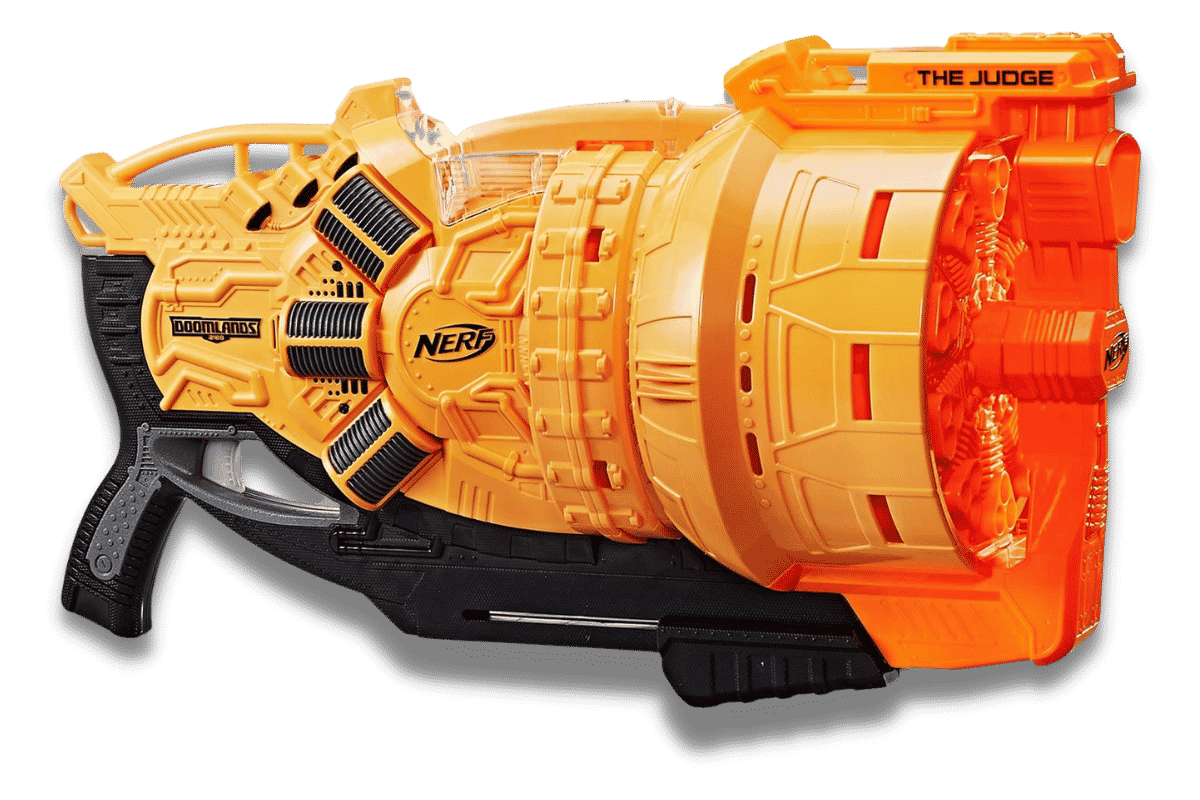
the judge [multi-fire | 54 FPS]
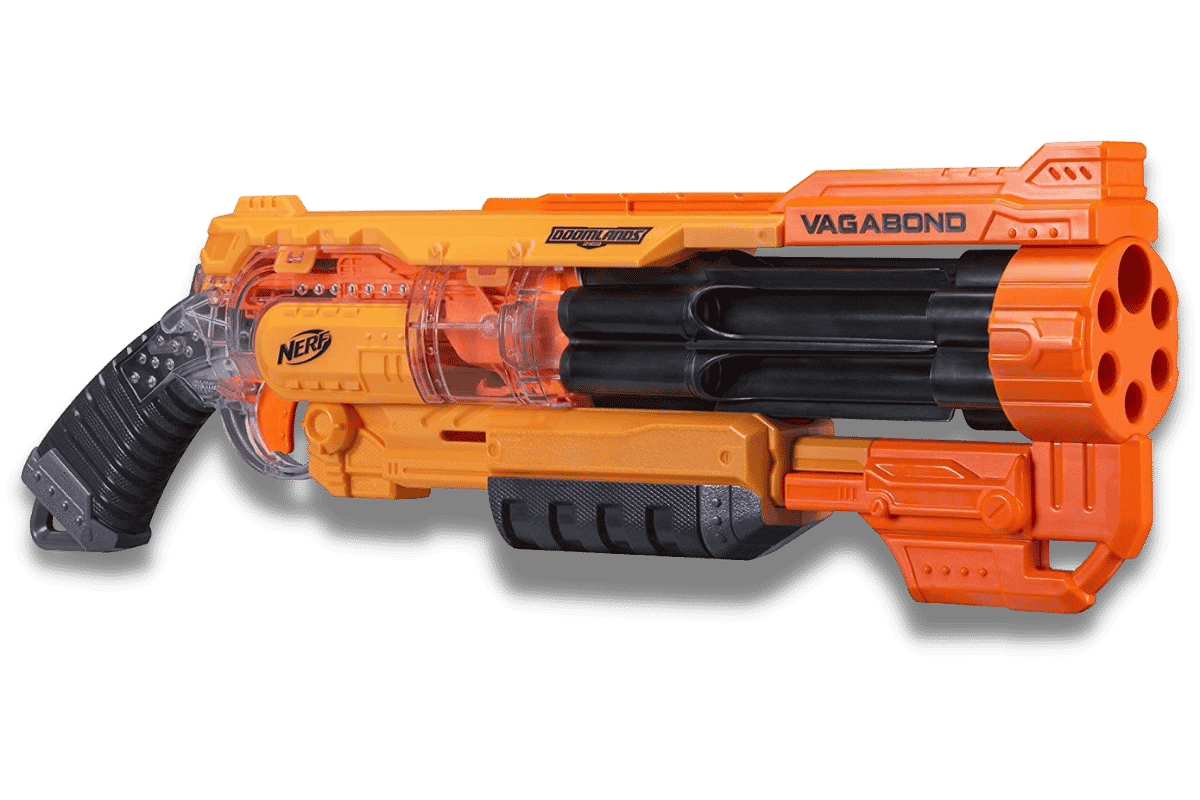
vagabond [slam-fire | 74 FPS]
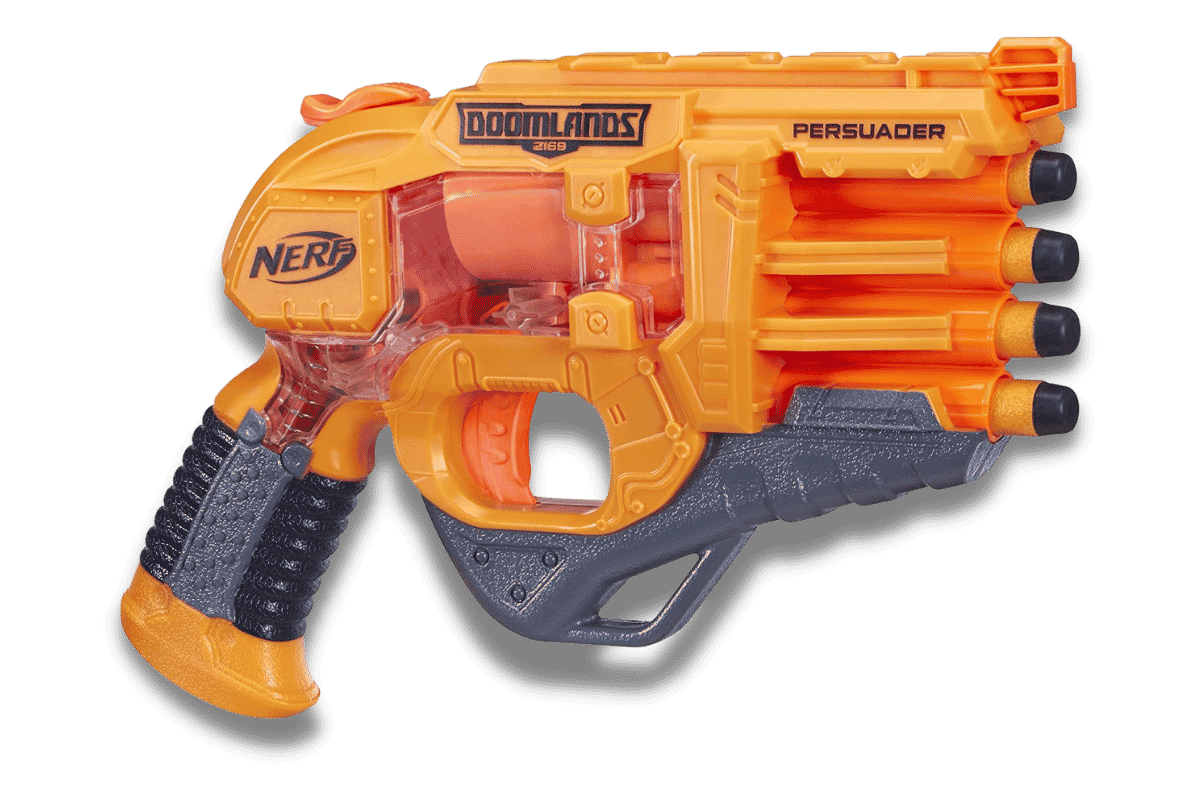
persuader [single-fire | 76 FPS]
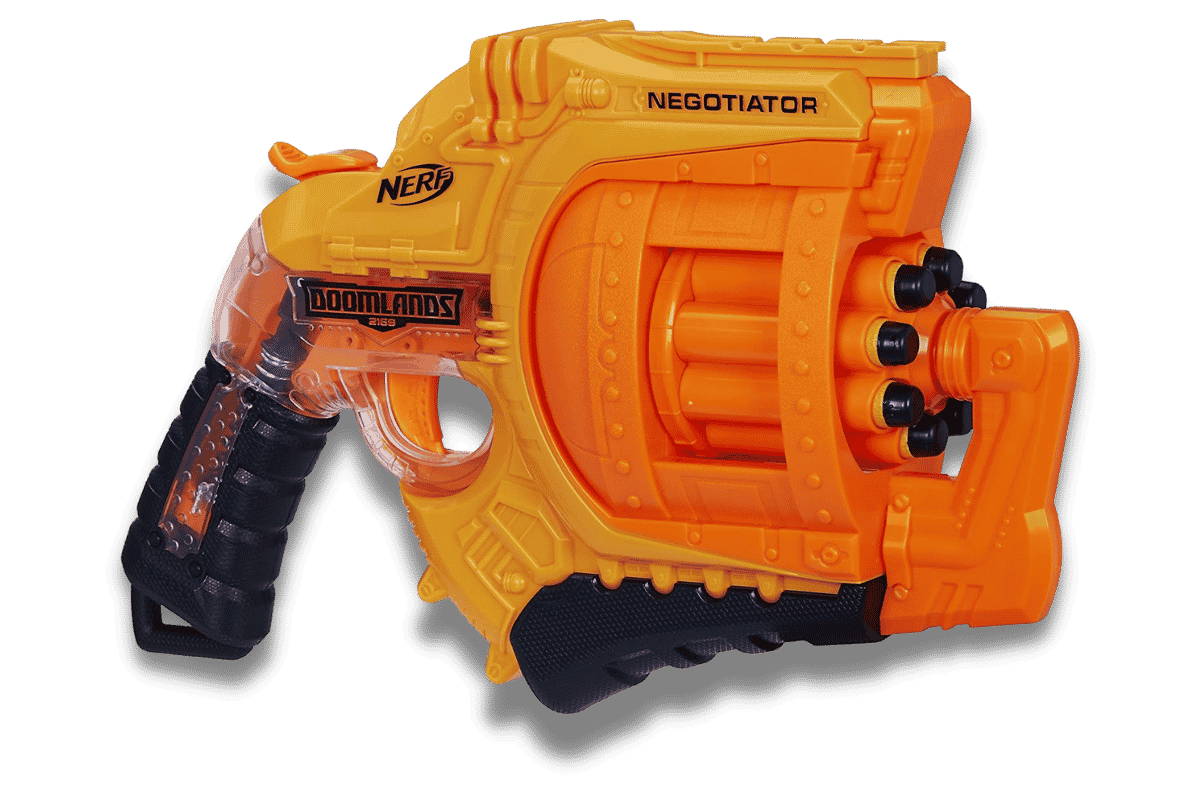
negotiator [single-fire | 62 FPS]
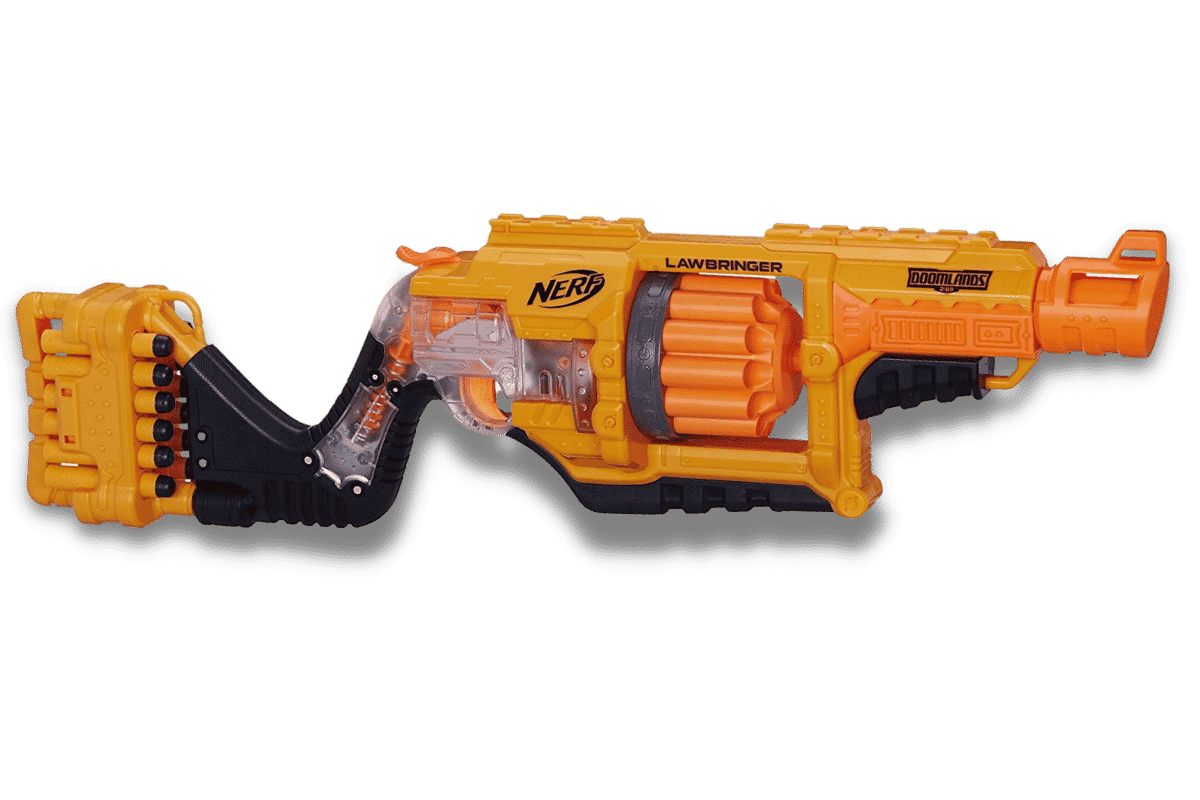
lawbringer [single-fire | 73 FPS]
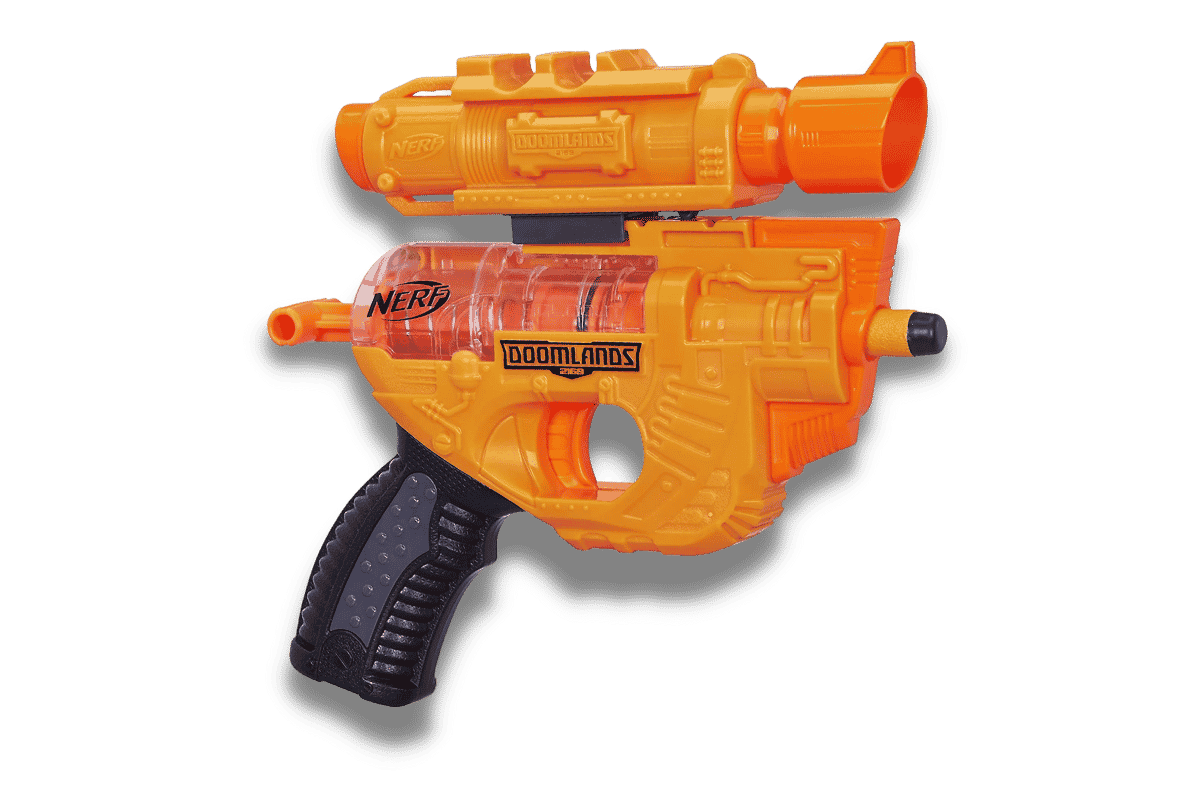
holdout [single-fire | 72 FPS]
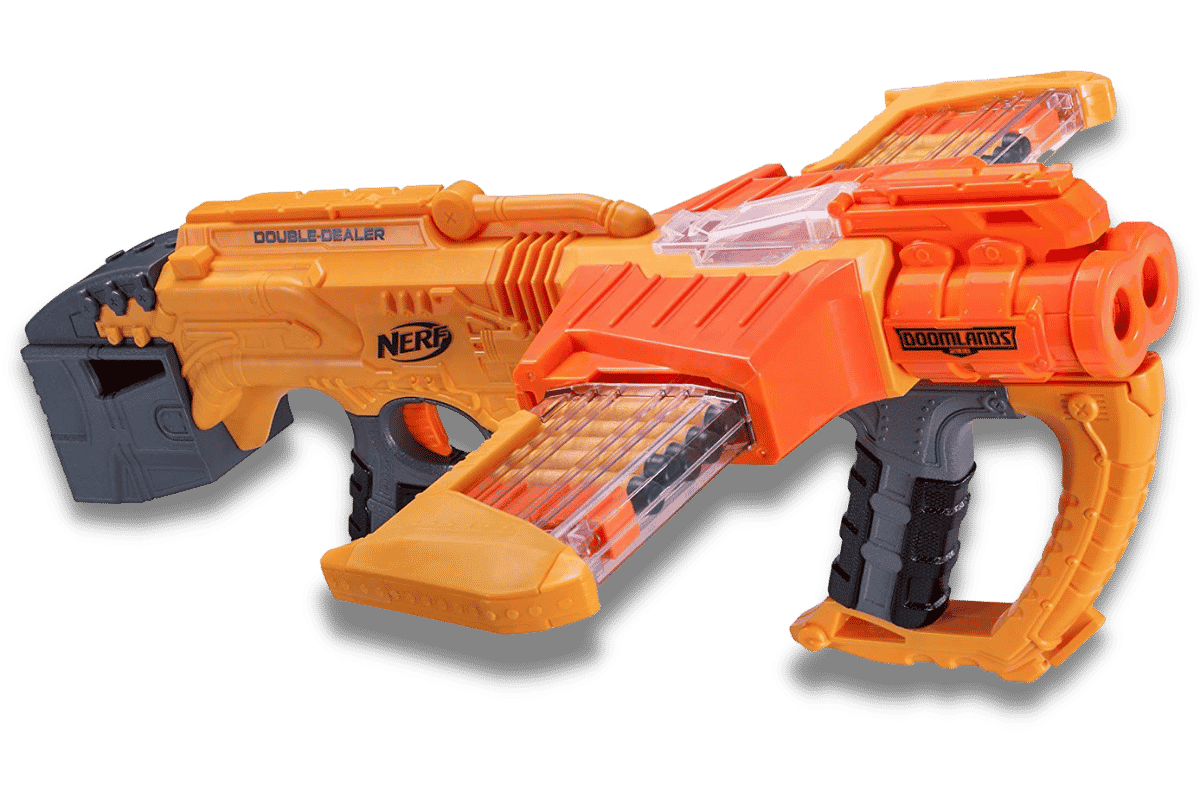
double dealer [multi/slam-fire | 63 FPS]
Doomlands 2169 Ammo and Technical Info
Doomlands 2169 runs on series-specific orange-yellow darts that are functionally identical to standard Elite darts — full cross-compatibility with the N-Strike ecosystem in both directions. Performance benchmarks sourced from community chronograph testing.
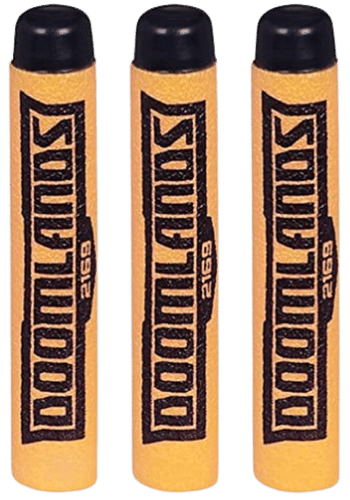
doomlands nerf darts
Front-loading cylinders dictate the pace of the Doomlands 2169 loadout. The architecture is purpose-built around continuous action—operators top off chambers mid-firefight directly through the open cylinder face without dropping a magazine or breaking battle posture. Priming mechanisms split between hammer-action and pump-action across the lineup, but the front-loading chamber is the constant.
The logistics run on a straightforward cross-compatibility standard:
- Ammunition: Series-specific Doomlands Darts feature orange-yellow bodies with black streamlined heads, functionally identical to standard Elite darts and cross-compatible with the N-Strike Elite ecosystem. The cosmetic shift is the only difference – no proprietary ammo requirements, no cross-compatibility friction.
- Magazine Platforms: The Desolator and Double Dealer operate as the lineup’s exceptions, accepting standard N-Strike Elite magazines with cosmetic baseplates. The Double Dealer introduces a clear twelve-round magazine with a yellow P-MAG-style pull grip, which is fully reverse-compatible with any Elite magwell
- Accessory Limits: Cross-compatibility runs one direction across the series. Doomlands accepts the Elite ecosystem, but omits N-Strike front barrel lugs by design, eliminating muzzle-side attachments. Ammo storage is integrated directly into the hardware instead, like the two spare mags housed in the Double Dealer’s stock, the Lawbringer’s 12-dart storage, the Holdout’s two-dart scope.
The Lawbringer’s twelve-round cylinder is the clearest expression of this payload philosophy. Hammer-Action priming and the trigger pull stay with the primary hand while the off-hand feeds darts into the chamber face, keeping the operator in the action. The firing position never breaks.
Diesel-punk roleplay is built directly into the Doomlands 2169 hardware. This isn’t a tactical loadout dressed up for show — the ecosystem is anchored by an orange-yellow wasteland aesthetic, black accents, and transparent side panels that expose the firing mechanics as they cycle.
Transparency is the signature design feature: Each blaster carries a clear plastic panel on one side revealing the plunger, catch mechanism, and internal gears as they fire. The asymmetry is deliberate, leaving the opposite side opaque and unfinished. Around these windows, the line layers corrugated lines, faux conduit piping, industrial vent slots, and engraved triangle textures on the black plastic. The result is a consistent nine-blaster catalog that looks genuinely weathered by a barren landscape.
The Impact Zone is the variant branch: This sub-series runs the same hardware in a different environment. Evoking a frozen tundra rather than a dusty desert, the arsenal shifts the color scheme to mostly white shells with black accents while keeping the clear transparency panels intact. It introduces two exclusive blasters — the Longarm and the Desolator — leaving the other seven to carry the standard orange-yellow aesthetic. Both the core line and the Impact Zone variants entered phase-out between 2018 and 2020, with deeper specifics living on the Impact Zone page.
The ecosystem is more than visual flavor — the diesel-punk identity frames the operator as a lone survivor working with weathered machinery, not a competitive shooter optimizing for points. The hardware doesn’t just cycle Nerf darts. It tells the operator’s story.
Hammer-action priming forms the mechanical foundation of the Doomlands arsenal. By letting the thumb prime and the index finger fire, blasters like the Lawbringer, Negotiator, and Persuader unlock true single-hand operation capability. The practical payoff is unchecked mobility: the operator can reload the cylinder, hold an objective, or keep moving without the blaster dictating body position.
When single-handed mobility isn’t enough, pump-action models like the Vagabond and Double Dealer expand the rate of fire with slam-fire mode. Hold the trigger, pump through the rounds, and the blaster cycles without pause. The lineup’s design narrative builds around a “Lone Hero” working through a lawless wasteland, which explains why the hardware prioritizes improvised, exaggerated aesthetics over precision engineering. The aesthetic and the operation tell the same story.
That wasteland aesthetic demands severe ergonomic trade-offs across the series:
- Cramped Grips: An unusually short reach between the back of the grip and the trigger makes extended sessions highly uncomfortable for anyone with larger hands.
- Unwieldy Bulk: Large frames compound the mobility issue; blasters like the Negotiator, Double Dealer, and The Judge are too wide and bulky to easily holster or maneuver quickly in tight spaces.
- Undersized Stocks: Shoulder stocks appear on several blasters but are consistently too short for practical shouldering, driving modders to saw them off entirely.
- Reload Complexity: The Judge’s massive thirty-round drum carries this trade-off to its extreme, offering maximum intimidation but a notoriously slow and tedious reload process.
This loadout abandons precision-optimized play by design. Tactical efficiency and ergonomic comfort are deliberately traded for a single defining capability: continuous fire with on-the-fly cylinder access. That is the deal the lineup offers.
Doomlands 2169 Nerf Guns deliver a compound tactical advantage rarely attempted by other lineups: one-handed firing paired with continuous reload access. The two capabilities are distinct but reinforce each other: hammer-action keeps the primary hand anchored on the blaster while freeing the off-hand to feed darts or maintain stability.
Sustained Presence: The Lawbringer defines this standard for the series. Twelve rounds in a rotating cylinder, hammer-action priming driven by the thumb, and a standard index finger trigger pull ensure the firing hand never breaks position. This leaves the off-hand available to push through doors, clear obstacles, or scavenge the landscape for ammo. The Negotiator and Persuader run the same hammer-action architecture, extending the tactical strength across three blasters in the core lineup.
The Continuous-Fire Advantage: Standard magazine-fed blasters force an operational pause: stop, drop the spent magazine, seat a fresh one, and re-rack before resuming fire. Front-loading open cylinders eliminate that disruption entirely. The Lawbringer’s twelve-round cylinder accepts darts through the open chamber face mid-firefight without breaking momentum. Reloading is as seamless as cycling the blaster.
Dual-Wield Configurations: The Negotiator and Persuader take this architecture a step further by supporting dual-wield setups. Running two hammer-action revolvers in tandem delivers alternating fire without a forced stop, a trick magazine-fed blasters cannot replicate since mag swaps inherently require both hands to execute. The known cost is reload efficiency—neither hand is free to reload the other’s cylinder while both are committed to maintaining fire.
This compound advantage guarantees sustained presence in the engagement zone. The firing hand never leaves the grip, and the reload hand never searches for a spare magazine. It is a deliberate trade-off for HvZ and casual formats. Staying in the action simply matters more than first-dart accuracy.
Most Doomlands 2169 blasters hit within striking distance of the 70 FPS Elite standard, but the series carries specific mechanical outliers that dictate purchase decisions. Performance data establishes a definitive hierarchy. The Desolator, Vagabond, and Lawbringer are the safe investments. The Negotiator and Double Dealer require a deliberate compromise: one for a velocity gap, and one for a known reliability risk.
The field data maps the lineup into three distinct performance tiers:
- The Reliable Core: The Desolator and Vagabond land at 73 FPS (community chronograph testing by Coop772, CJ Nerf, and Randomshadow09). The Holdout at 71 and the Persuader at 69 follow closely behind, while the Lawbringer anchors the ~70 FPS baseline with no documented operational failures.
- The Mechanism-Driven Drops: The Negotiator averages a noticeably soft 59 FPS with a 35 to 40-foot effective range—an unexplained performance gap rather than a correctable manufacturing defect. The Judge’s drop has a cleaner explanation: firing three darts simultaneously from a single plunger stroke divides the available air across three paths, pulling per-dart velocity down to 54 FPS. That’s the physics cost of the shotgun-spread architecture — individual dart velocity traded for area coverage.
- The Double Dealer Problem: This dual-magazine pump-action Nerf gun is the series’ problem child. A 62 FPS average is overshadowed by mechanical failures straight out of the box: the blaster constantly jams, destroys darts in the feed cycle, and locks up the priming handle. Three design flaws converge: a main spring too weak to reset the pump lock, a sensitive ratcheting mechanism that catches under load, and a breach that snags darts from the dual magazines. Modders are forced to address all three by installing stronger replacement springs, physically removing the internal ratchet locks, and trimming the AR pegs to prevent dart damage.
Doomlands 2169 Intel: Trending Guides and Nerf Gun Case Studies

The Evolution of Nerf Guns Post 2021 – On Track To Where?
Keith2026-01-26T19:01:26+00:00
DinoSquad Nerf Guns – Can These Dino Blasters Deliver
Keith2026-01-26T13:46:56+00:00