Mega Nerf Guns
Mega Nerf Guns are built to be heard before they connect — the whistling dart is part of the strategy, not a side effect. The format spans compact pocket pistols to a 24-round full-auto flywheel flagship, running one shared doctrine across a decade of releases.
Nerf Mega Series Directive: Bigger Darts, Bigger Impact, Battlefield Intimidation
Bigger darts mean bigger impact, and bigger impact means battlefield intimidation — Mega’s entire design philosophy compressed into one escalating idea. Nineteen blasters carry that idea from $8 pocket pistols to an 80-dollar, six-D-battery flagship, all firing the same whistling Mega Darts that scream their way towards impact.
The Intimidator is the operator this doctrine built — someone who wins the psychological exchange before either side fires a shot, accepting wild accuracy, bulky shells, and slow reloads as the price of that presence. In Humans vs. Zombies formats that grant Mega ammo special shield-breaking rules, that presence becomes genuine mechanical advantage rather than just spectacle.
Not every blaster earns the doctrine equally — the Centurion’s launch problems still define the line’s most cautionary purchase, while the format’s oversized plunger tubes became one of the modding community’s most unlikely standards. Performance data, the full Elite dart conversion story, and Mega’s evolution into Mega XL are documented in the sections below.

Ages 8+

$10-95

Average Rating 4.5

Mega Nerf Darts

Increased Range
| Series | # of Blasters | Ammo | Magazine/Cylinder Capacity (Low–Max) |
Avg Velocity | Technical Highlights |
|---|---|---|---|---|---|
| Accustrike | 10 | AccuStrike Elite Darts | 1–25 | 70 FPS | Superior Accuracy Focus |
| Elite 2.0 | 15 | Elite 2.0 Darts | 1–18 | 80 FPS | Tactical Arsenal, Customization |
| Zombie Strike | 23 | N-Strike Elite Darts | 1–25 | 65 FPS | Zombie Theme, Tactical |
| Modulus | 20 | N-Strike Elite Darts | 1–12 | 68 FPS | Tactical Arsenal, Customization |
| Alpha Strike | 17 | Elite Nerf Darts | 1–10 | 65 FPS | Budget Blasters, Tactical, Simplistic |
| Impact Zone | 2 | Elite Nerf Darts | 5–10 | 71 FPS | Apocalyptic Theme, Adventure |
| Doomlands 2169 | 7 | Elite Nerf Darts | 1–30 | 69 FPS | Futuristic Theme, Doomsday |
| Ultra | 14 | Ultra Nerf Darts | 1–25 | 94 FPS | Tactical Arsenal, Futuristic, Accuracy |
| Mega | 14 | Mega Nerf Darts | 1–24 | 73 FPS | Tactical Arsenal, Oversized, Accuracy |
| Hyper | 6 | Hyper-Rounds | 20–100 | 107 FPS | Tactical, Futuristic, High-Capacity |
| Rival | 18 | High-Impact/Accu-Rounds | 1–100 | 94 FPS | Tactical, High-Capacity, Accuracy (14+ Eye Pro) |
Mega Nerf Guns Arsenal: Full Lineup, 19 Blasters Built Around Oversized Payload
Nineteen Mega Nerf guns running whistling Mega Darts — from single-shot pocket pistols to high-capacity drums and slam-fire revolvers, all built around one overriding premise. Size is the strategy.
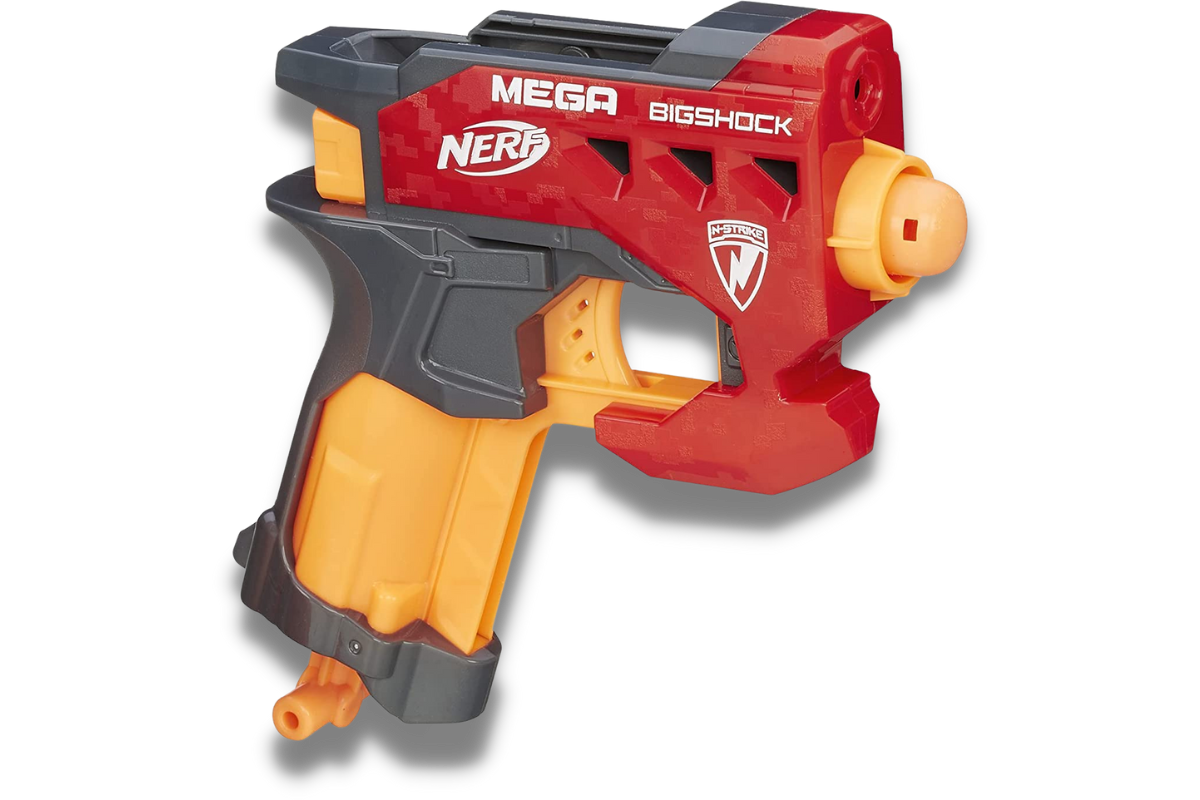
bigshock [single-fire | 55 FPS]
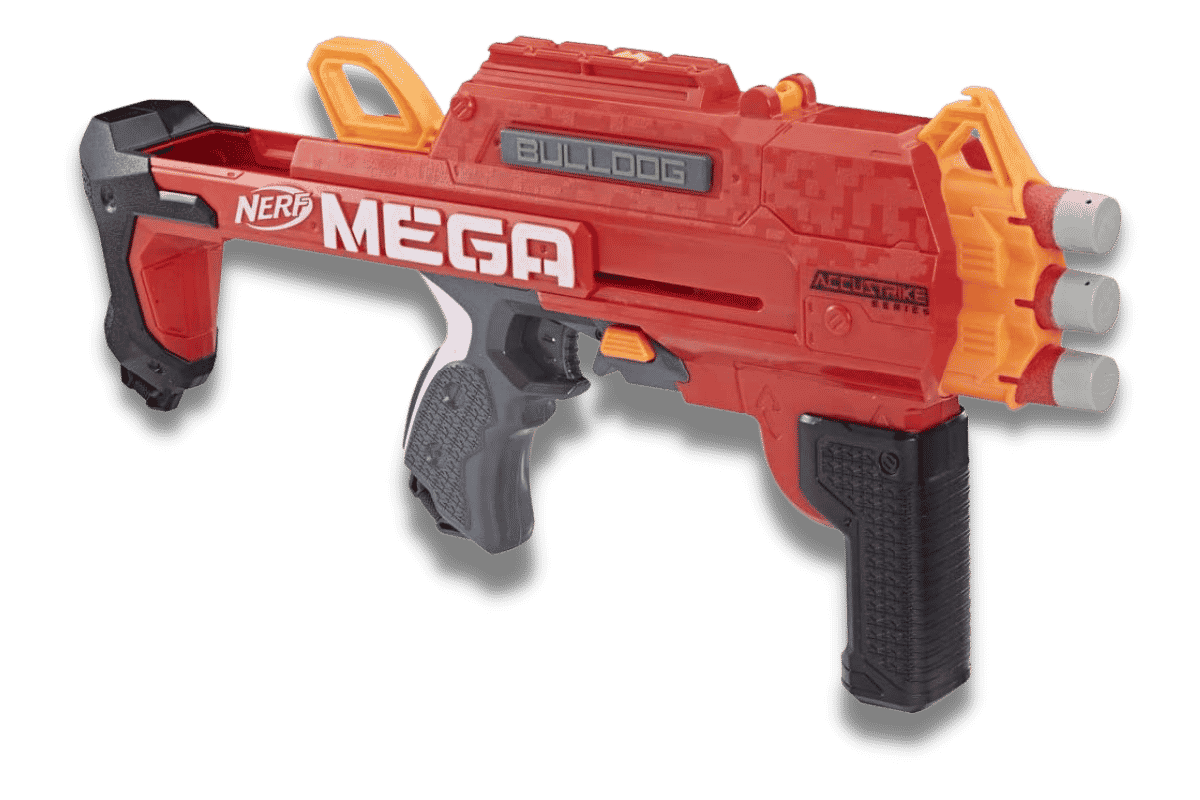
bulldog [single-fire | 70 FPS]
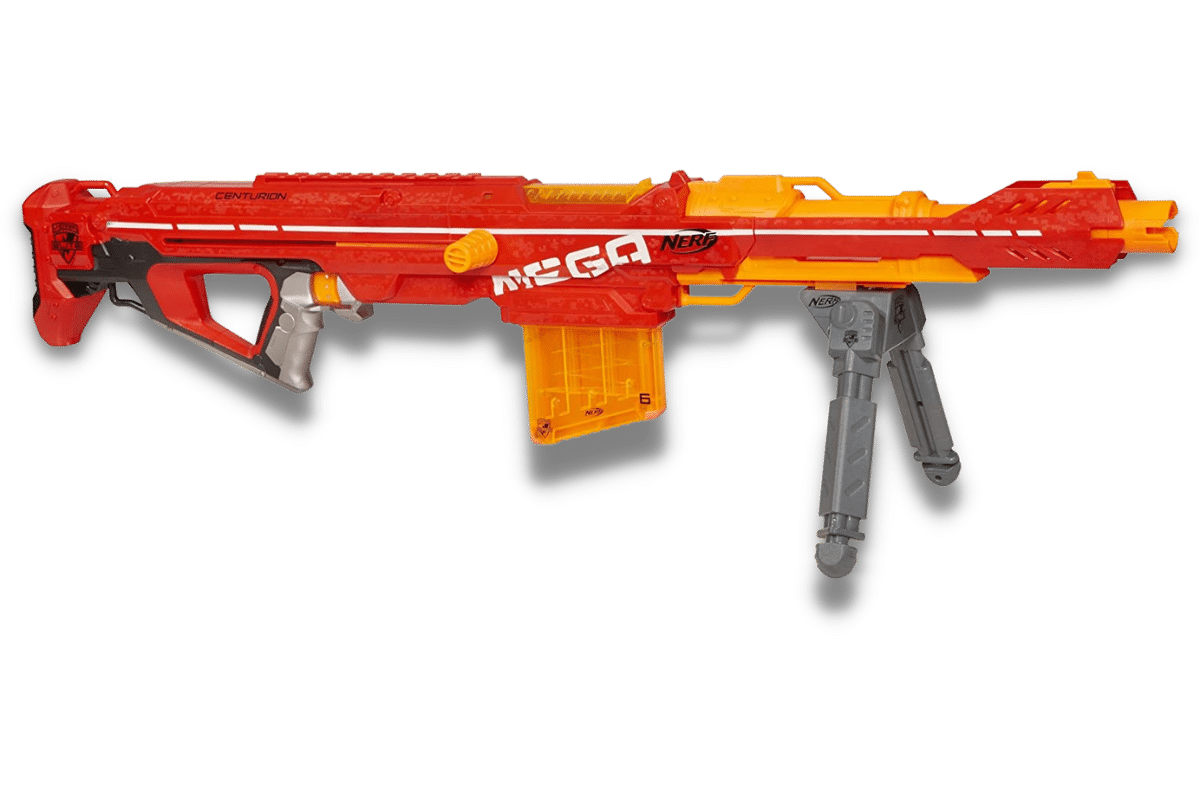
centurion [single-fire | 80 FPS]
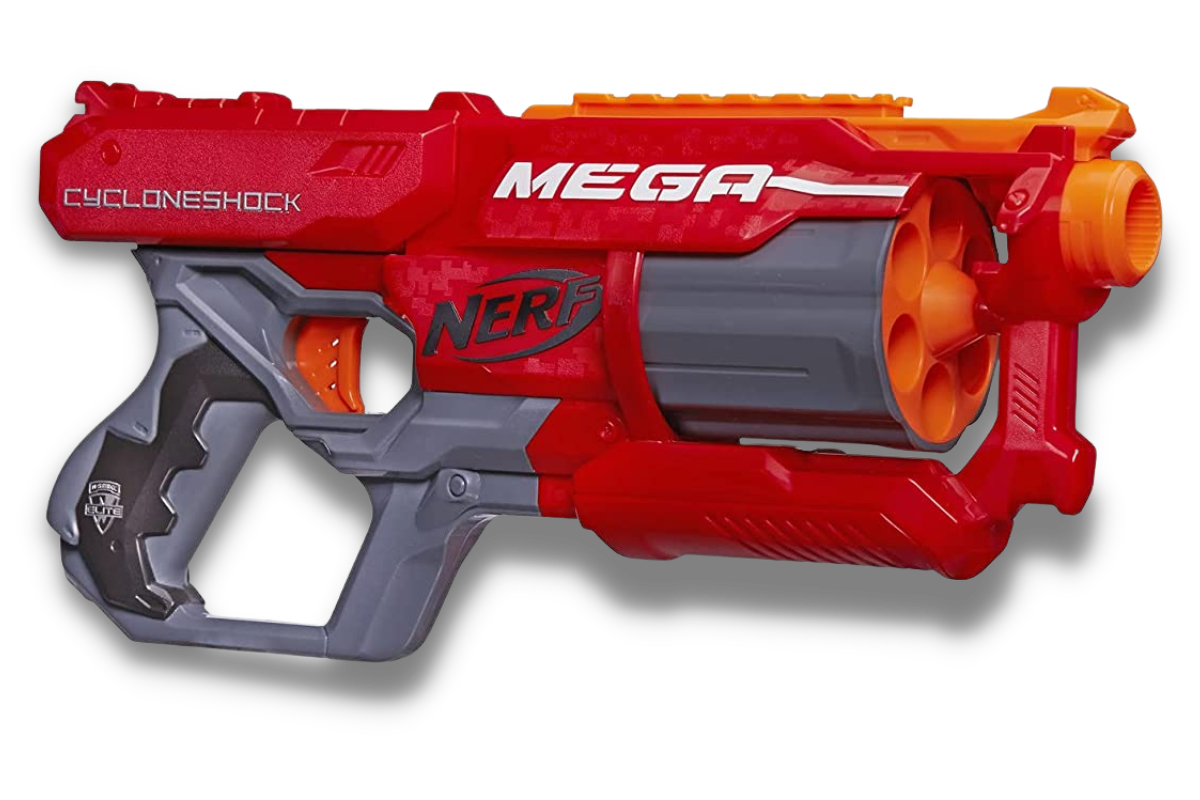
cycloneshock [single-fire | 70 FPS]
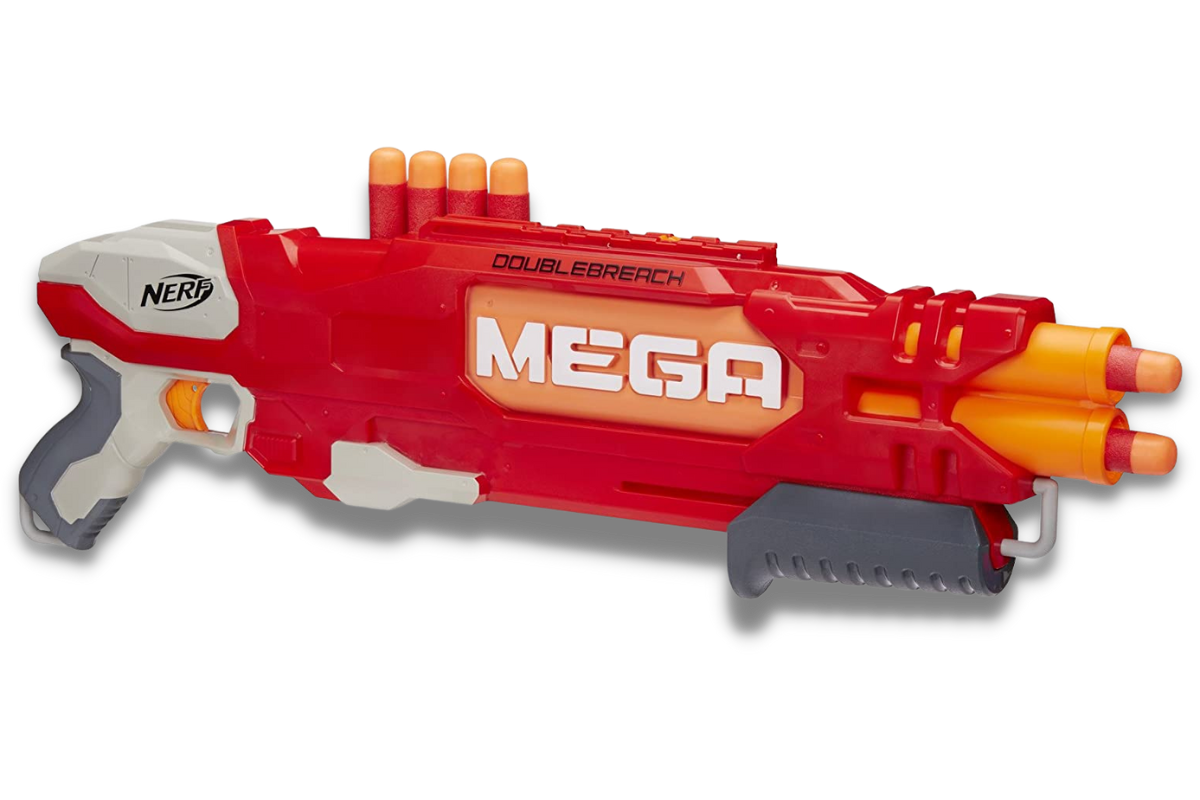
doublebreach [single/slam-fire | 70 FPS]
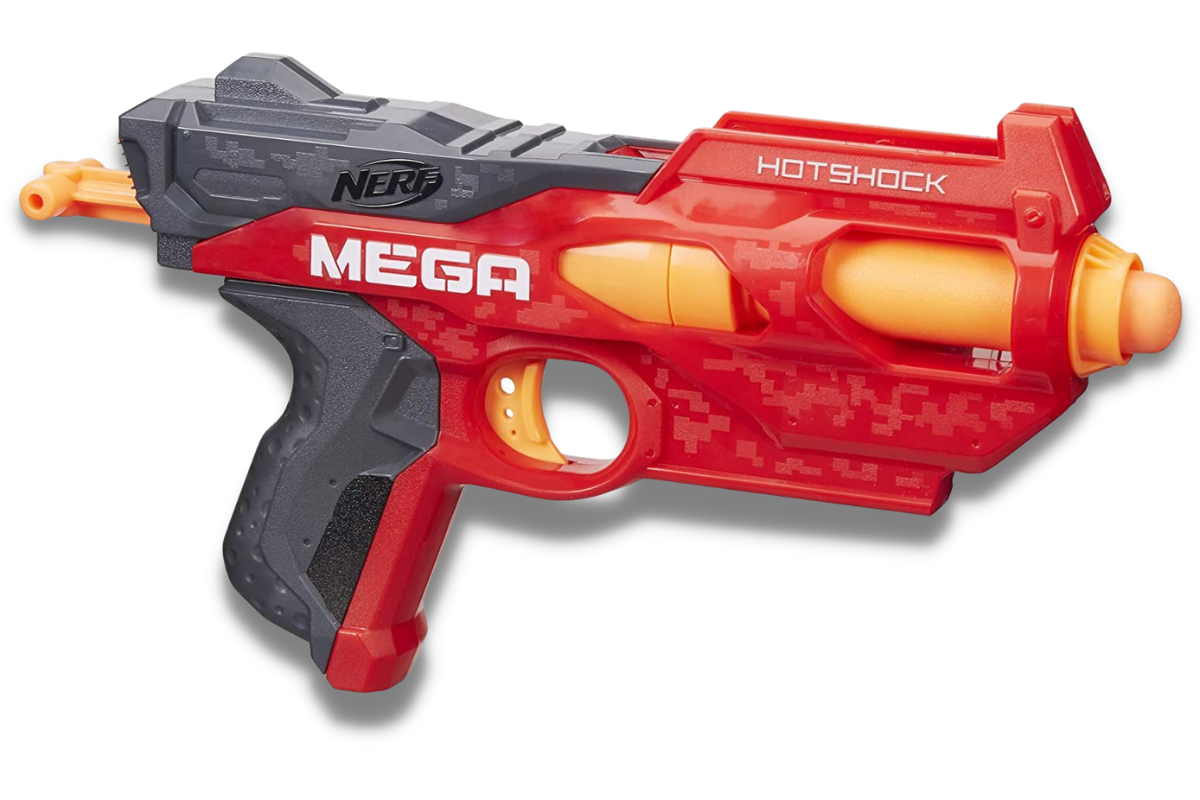
hotshock [single-fire | 55 FPS]
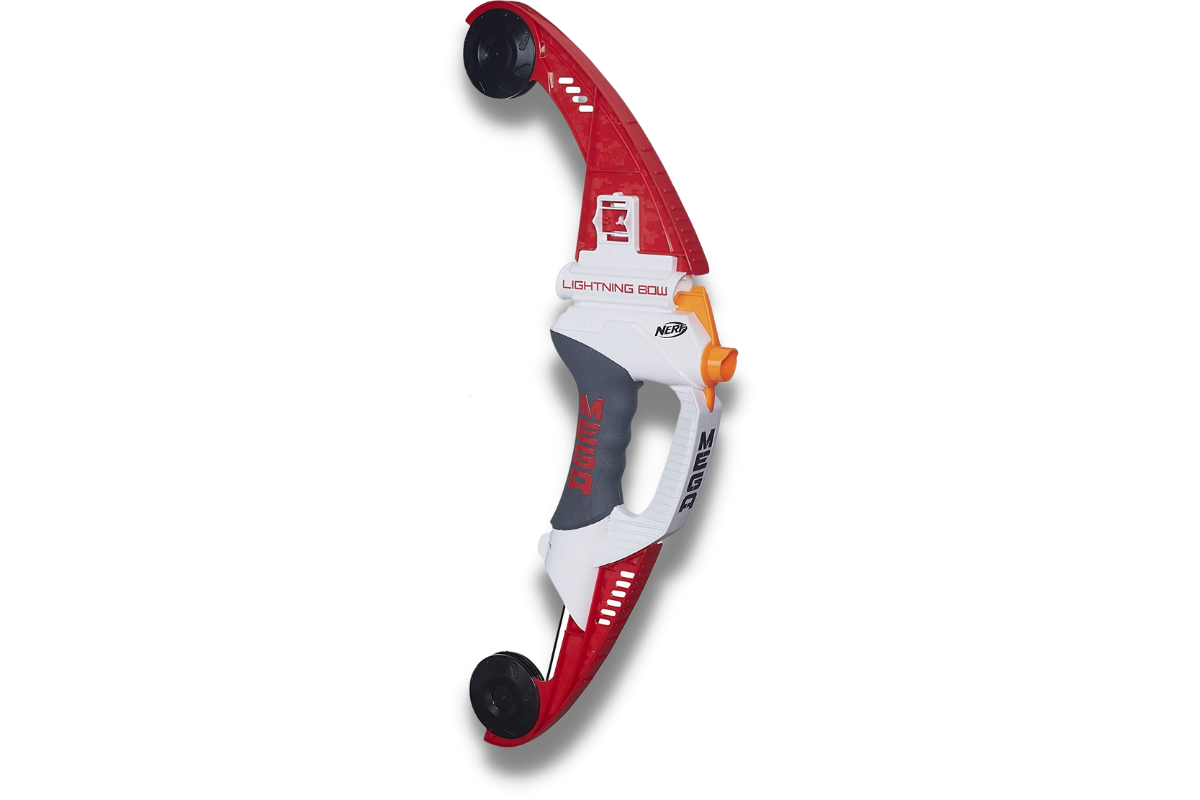
lightning bow [single-fire | 69 FPS]
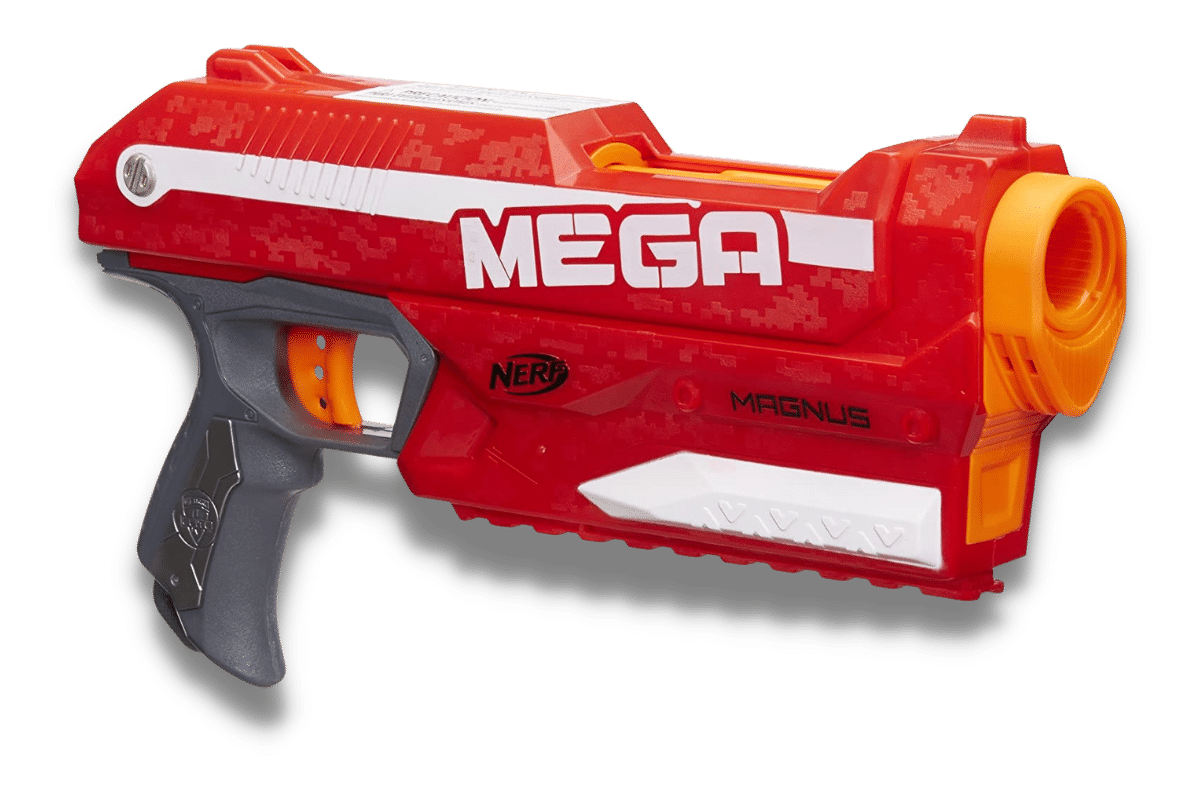
magnus[single-fire | 74 FPS]
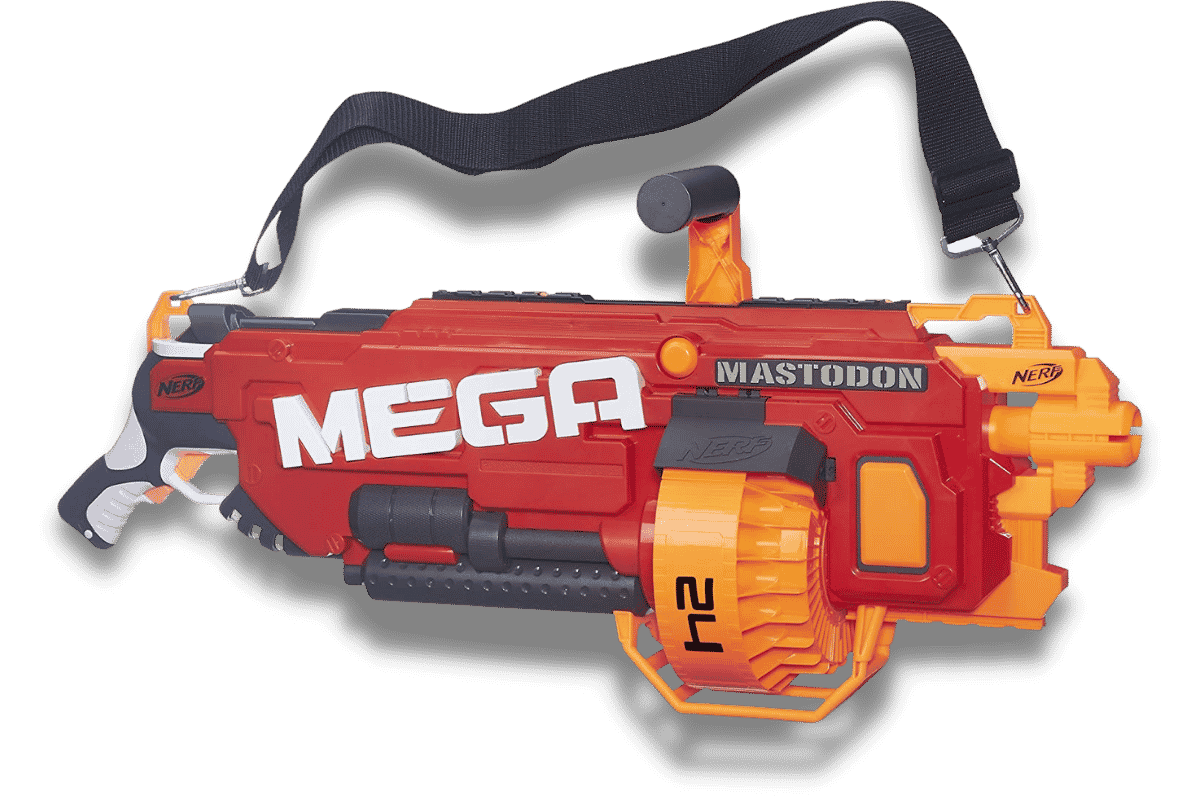
mastodon [automatic | 78 FPS]
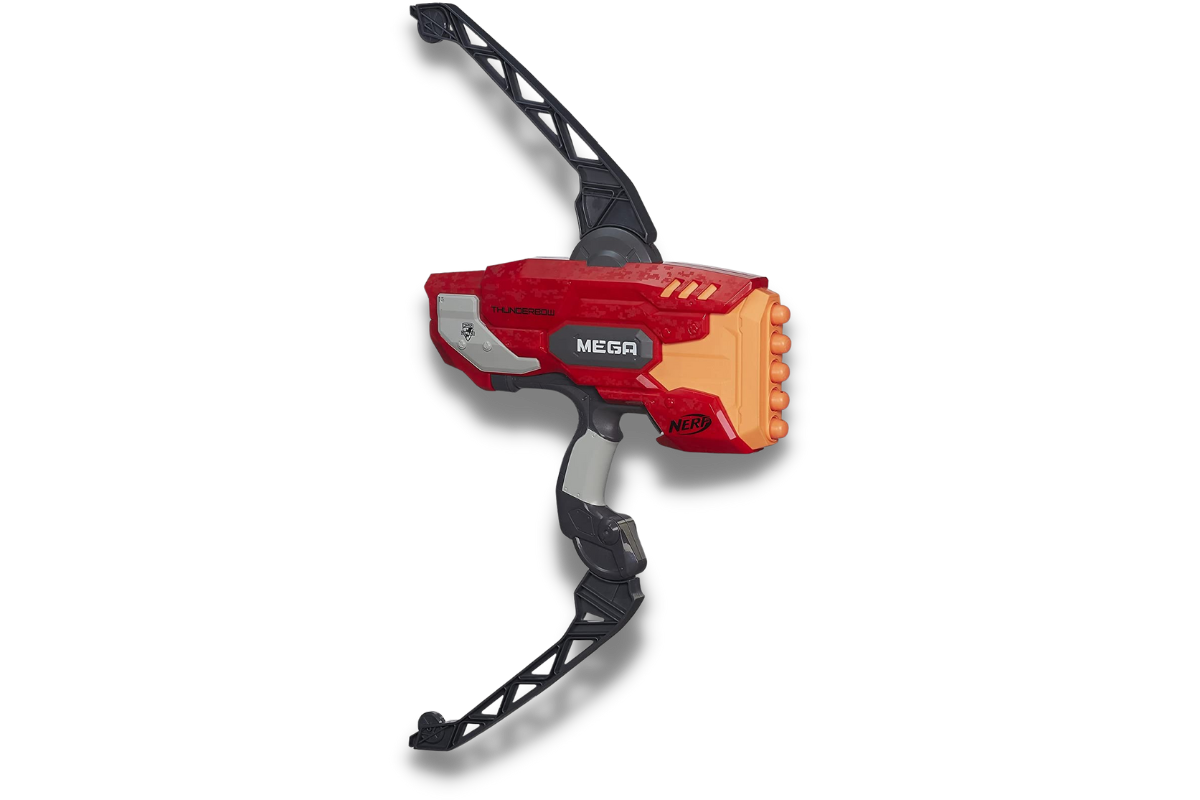
thunderbow [single-fire | 77 FPS]
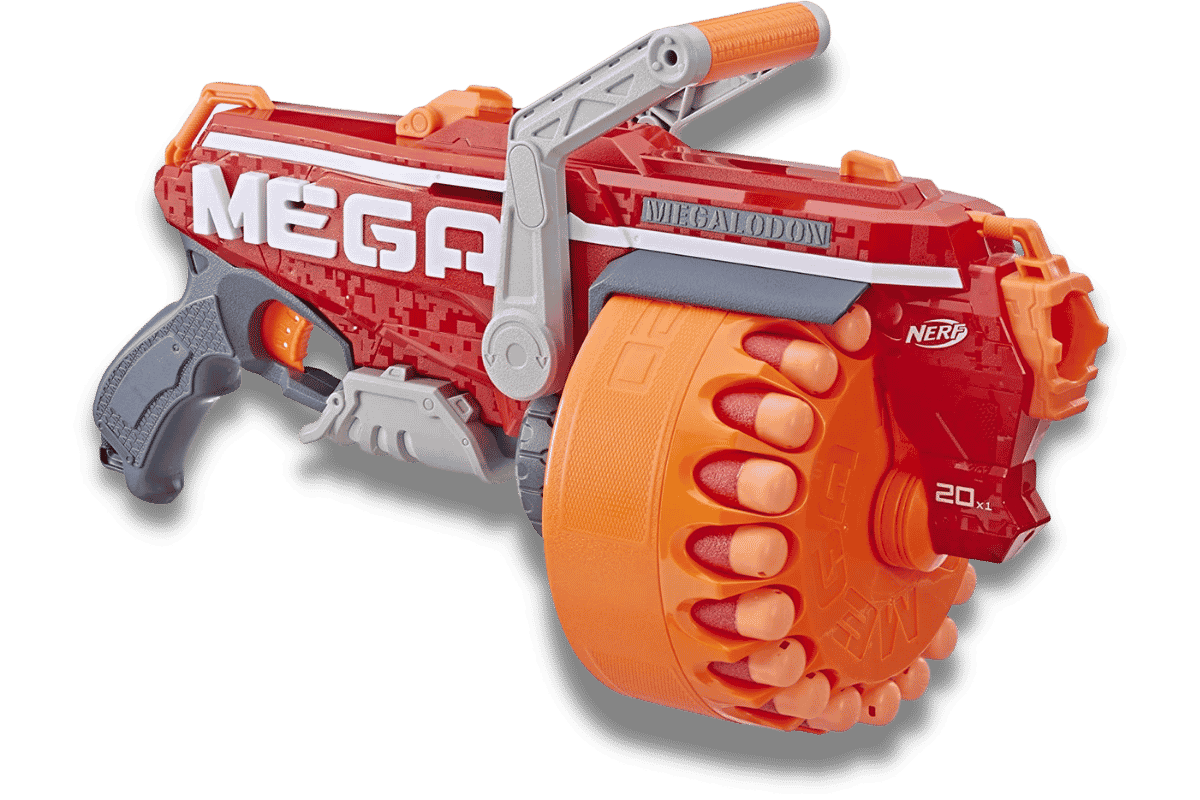
megalodon [single/slam-fire | 67 FPS]
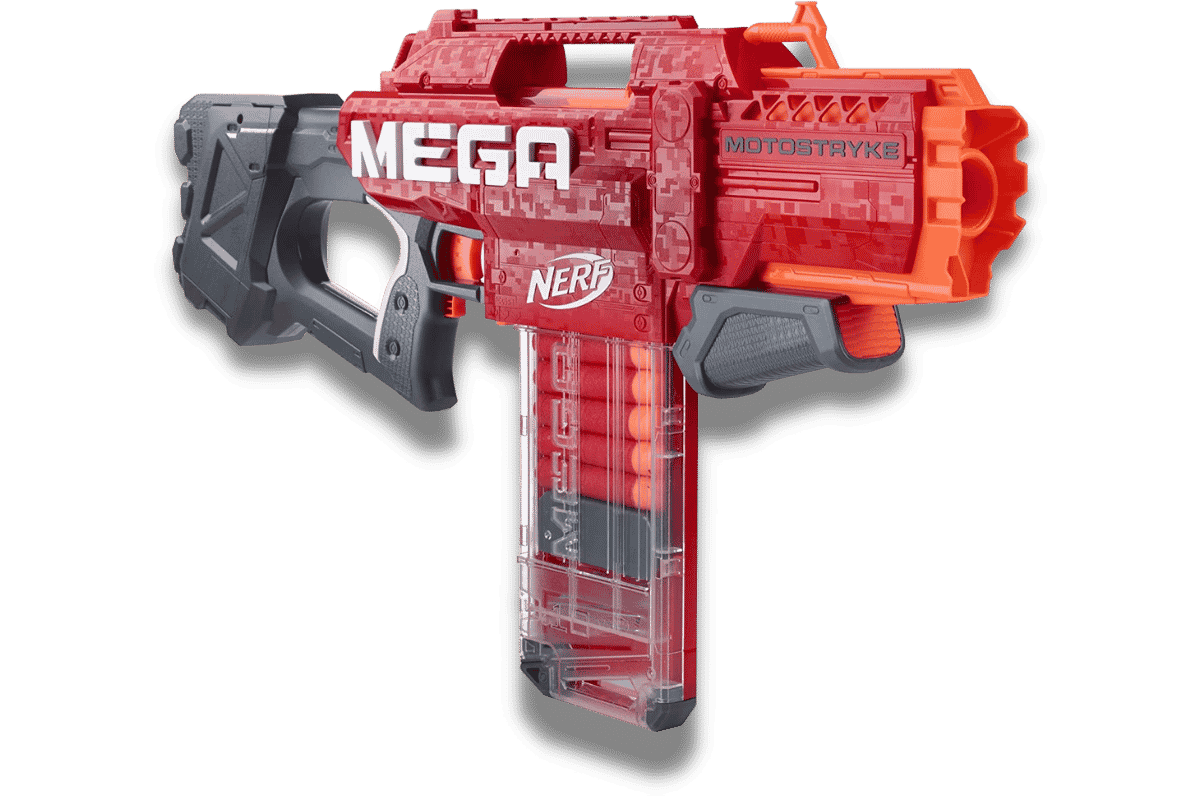
motostryke [semi-automatic | 72 FPS]
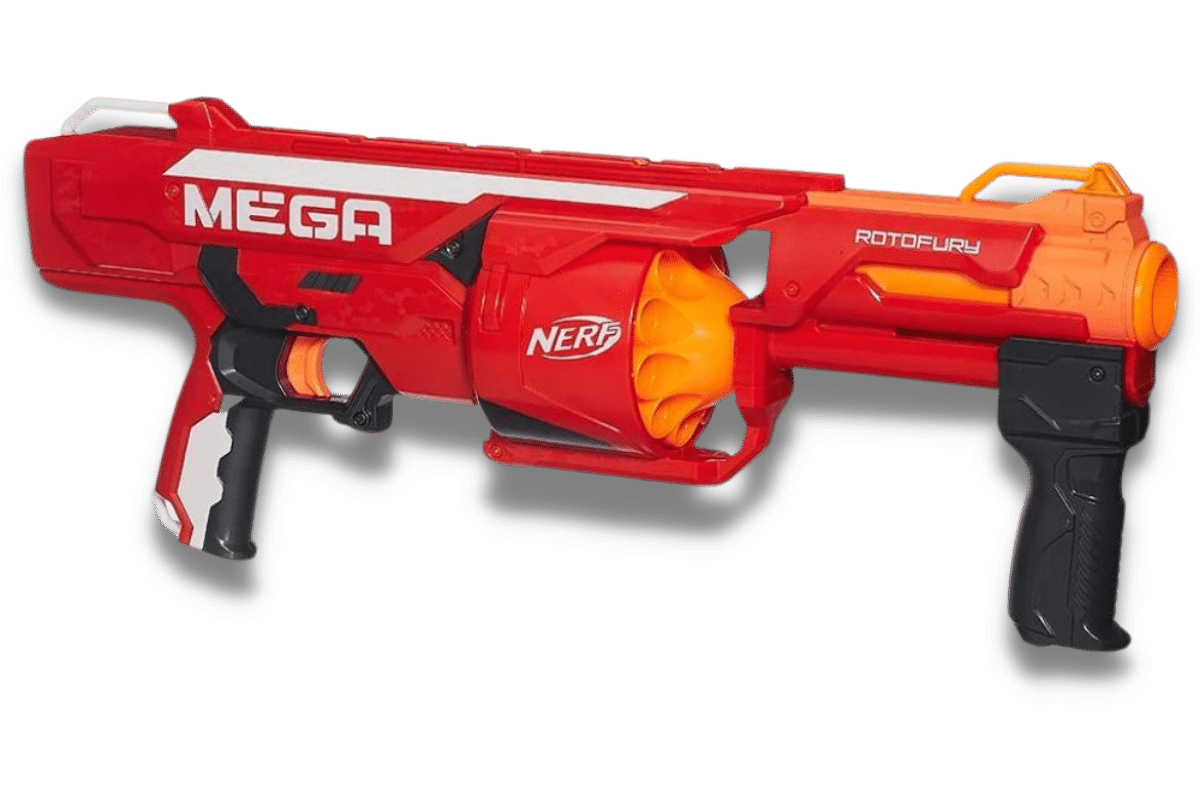
rotofury [single/slam-fire | 72 FPS]
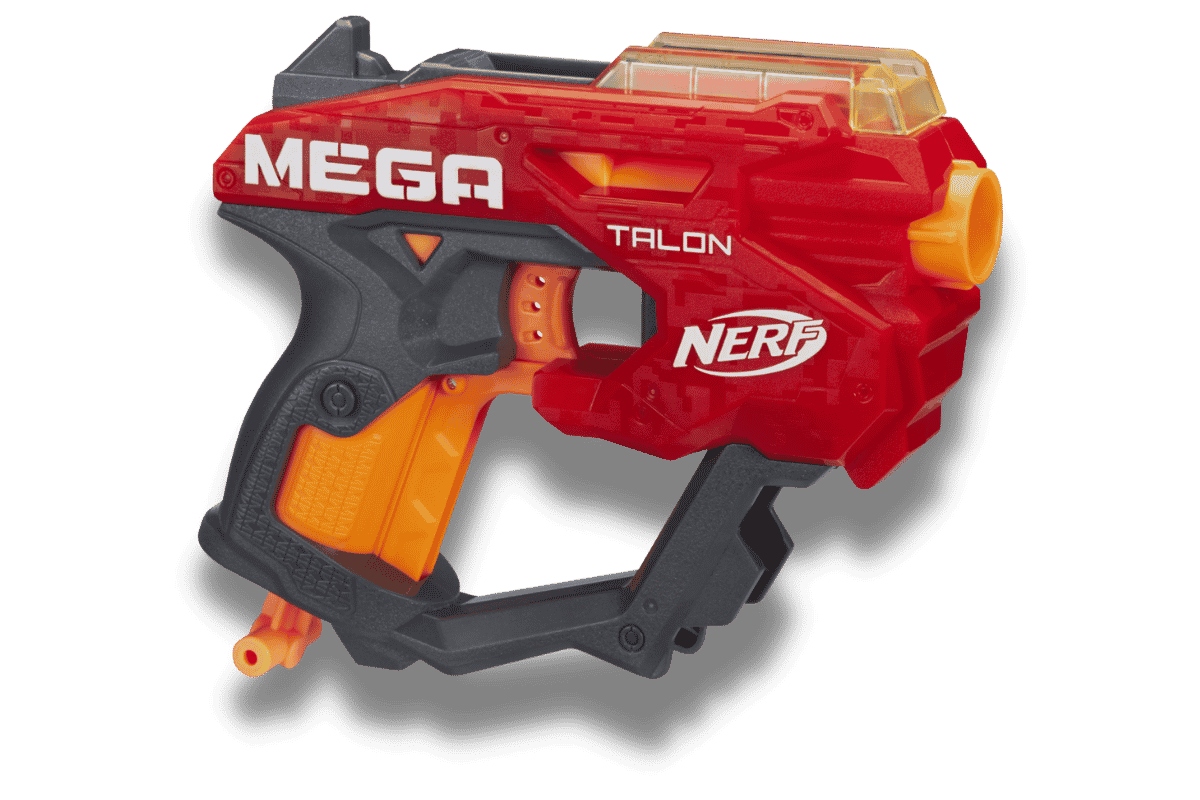
talon [single-fire | 58 FPS]
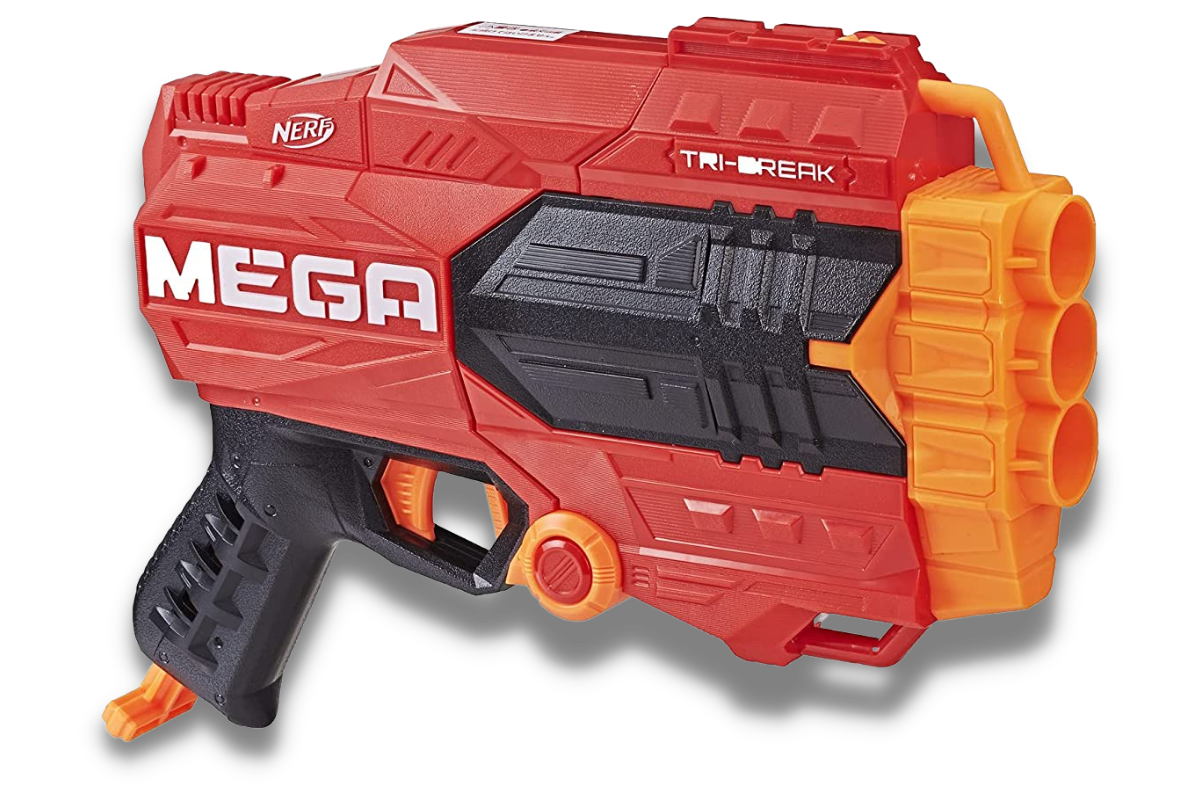
tri-break [single-fire | 66 FPS]
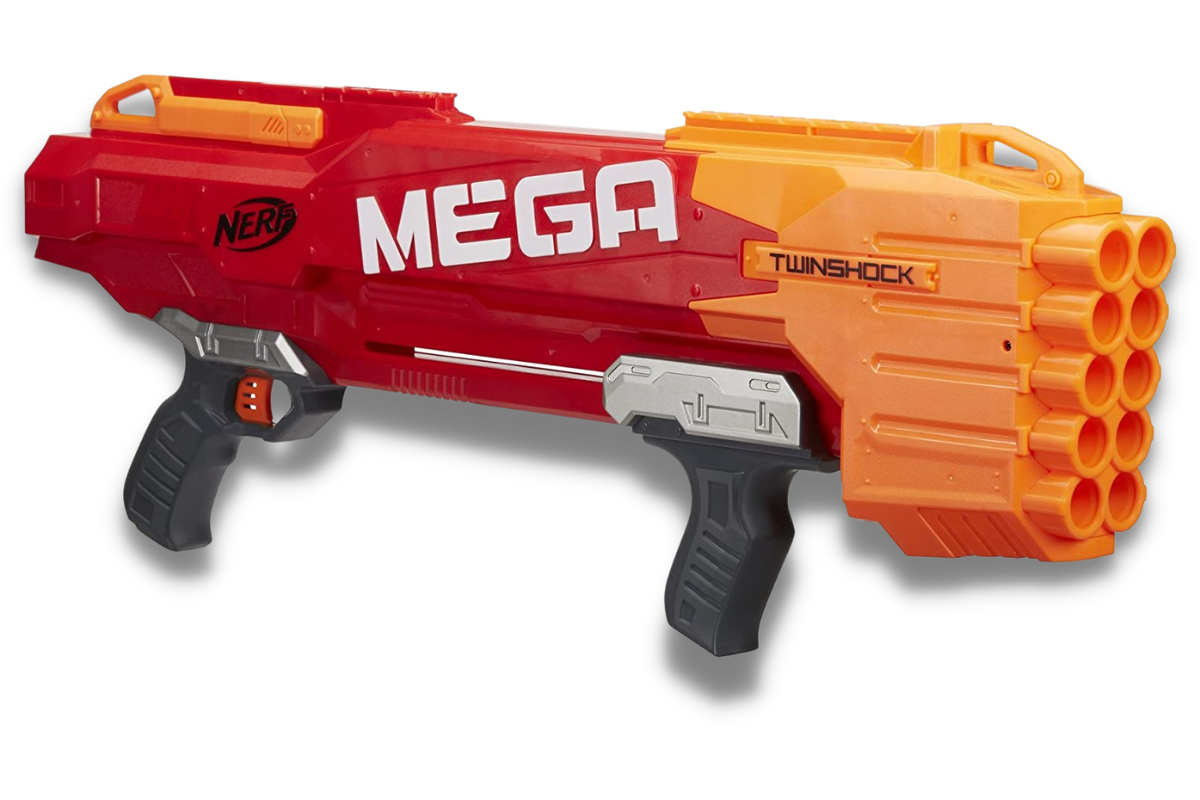
twinshock [single/slam-fire | 73 FPS]
Mega Ammo and Technical Info
Mega fires series-specific Mega Darts — red foam bodies and distinctive orange whistling heads, cross-compatible within the Mega ecosystem. AccuStrike Mega Darts address the format’s most documented accuracy flaw with a flat-head redesign. Performance benchmarks sourced from community chronograph testing.
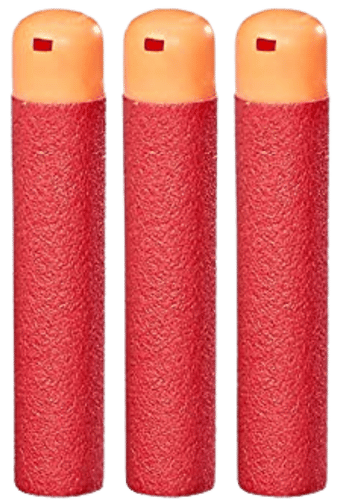
mega nerf darts
Mega Nerf Guns fire Mega Darts — a red foam body topped with a distinctive orange whistling head, a loud and physically commanding ammo format. The whistle is functional, not decorative: it’s part of the series’ “bigger is better” intimidation philosophy, audible mid-flight as a psychological cue rather than a stealth liability. Color variants extend the format without changing the mechanics — green for the 2014 Zombie Strike crossover, a Fortnite-branded version, and the AccuStrike Mega Dart’s flat head, covered below.
The AccuStrike Mega Dart exists to solve the series’ single biggest complaint — Mega ammo’s notorious mid-flight veer and fishtail. Swapping the standard rounded head for a flat profile measurably tightens accuracy, and Hasbro built three blasters specifically around it: the Nerf Thunderhawk, Talon and Bulldog. These aren’t a separate sub-series sold elsewhere — they’re part of Mega’s own 19-blaster lineup, distinct from the standalone AccuStrike series covered on its own page. The flat-headed darts remain backward compatible with standard Mega blasters, so an AccuStrike dart works in a Centurion or a CycloneShock without issue; the accuracy benefit is what changes, not the compatibility.
Most of the 19-blaster lineup skips magazines entirely — front-loading single shots, rotating cylinders, and internal drums dominate the arsenal, a direct consequence of how much space a single Mega dart actually occupies. The Centurion and the 2020 MotoStryke are the exceptions, running 6-round and 10-round magazines respectively that are cross-compatible with each other — and, unusual but true, the third-party Buzz Bee Air Max clips as well. Accessory compatibility runs into a harder wall: Mega blasters carry no N-Strike barrel attachment lugs at all, since a standard Elite barrel would physically jam a Mega dart, and no N-Strike stock attachment points exist anywhere in the lineup. Sling mounts are the standard carry solution instead — most blasters ship with a shoulder strap rather than relying on tactical rails, which the lineup includes but rarely uses to functional effect.
For the Intimidator, the logistics picture is consistent with the archetype — ammo capacity is traded for size and presence, accessory compatibility is sacrificed for raw bulk, and the AccuStrike variants are the one logistics choice that trades intimidation for actual aim.
Mega’s ecosystem branches in four directions — three purely cosmetic or accuracy-focused variant lines, and one full evolutionary successor. AccuStrike solves a mechanical problem, while BattleCamo and Sonic ICE add some curb-appeal. Mega XL solves the “what comes after Mega” problem entirely, with its own locked page covering the larger format in full.
AccuStrike. AccuStrike’s role within Mega is narrow and specific — three blasters addressing the line’s worst-documented flaw, ammo accuracy, without touching anything else about the format. Full dart mechanics and cross-compatibility are covered in Logistics & Payload above; the ecosystem story is simply that Hasbro identified accuracy as worth a dedicated sub-line rather than a running fix across the whole series.
BattleCamo. BattleCamo is cosmetic only — white shells with red digital camouflage applied to existing blasters like the CycloneShock, sold as a market-differentiation play rather than a mechanical update. The 2014 Z.E.D. Squad crossover with Zombie Strike ran the same playbook in reverse: green Mega darts and a repackaged Magnus, riding the zombie trend rather than introducing anything new under the hood.
Sonic ICE. Sonic ICE applies the same cosmetic-variant logic to a different finish — transparent clear-blue shells on flagship blasters like the Centurion, Magnus, and ThunderBow, sold purely on visual appeal rather than any functional change.
Mega XL Evolution. Mega XL is where Mega actually went, not where it stopped. The 2021 successor doubles the dart size again, and the lineage runs deeper than marketing — as discovered by the Nerf modding community, the discontinued Centurion’s barrel natively accommodates the width of a Mega XL dart, so modders harvest it to serve as compression tubing in custom oversized builds. The full Mega XL lineup, archetype, and content are documented on its own page.
For the Intimidator, the ecosystem tells one story across four branches — Hasbro tried to fix Mega’s accuracy problem once, tried to refresh its shelf appeal twice, and eventually answered the format’s ceiling by building something bigger entirely. The Centurion’s barrel surviving into Mega XL builds is the throughline.
Size is the entire argument. Nineteen Mega Nerf guns build their case through sheer presence rather than precision — the Intimidator is the operator who wins the psychological exchange before either side fires a shot.
The doctrine runs on raw physical presence rather than tactical refinement. A whistling dart the size of a Mega round announces itself before it lands — the sound alone changes how an opponent reacts, independent of whether the shot connects. That psychological weight is what makes the Intimidator viable as a suppressive-fire specialist in HvZ formats, where, as creators like WalcomS7 have documented, event organizers often grant Mega ammo special shield-breaking rules against armored targets — examined further in Tactical Strengths. The doctrine isn’t about winning the engagement cleanly. It’s about making the opponent feel the engagement before it’s decided.
That presence comes at a steep operational cost. The darts are notorious for their unpredictable flight paths and a tendency to swerve off course at a distance. The ammo’s sheer bulk means an operator carries meaningfully less total firepower than a dart-based loadout occupying the same space — a real logistics constraint in any extended engagement. The blasters themselves compound it: oversized shells that are genuinely difficult to holster or maneuver through tight spaces, and reload mechanics with their own friction — single-dart front-loaders are slow shot to shot, and even the open-faced drums that make mid-engagement topping off easy are a tedious, dart-by-dart chore to load from completely empty. As community veterans like LordDraconical have extensively documented, the Centurion is the cautionary extreme of all three costs at once — bulky, inaccurate, and prone to severe jamming on top of it, examined fully in Field Notes.
For the Intimidator, none of these costs are oversights — they’re the price of the premise. A loadout built to be felt rather than aimed accepts inaccuracy, bulk, and slow reloads as the cost of admission. Mega was never trying to win on competence. It was trying to win on fear.
Oversized dart impact is Mega’s actual competitive currency — not raw velocity, but the physical and psychological weight a single connecting shot carries. The Megalodon, TwinShock, Mastodon, CycloneShock, and RotoFury all deliver that weight efficiently, the lineup’s named performance leaders for a reason.
The Megalodon’s 20-round drum and slam-fire capability make it the lineup’s most combat-effective secondary — exactly the kind of platform the open-faced drum reload advantage benefits most, since topping it off mid-engagement doesn’t require breaking position. The TwinShock pairs an exceptionally smooth pump prime with a two-stage trigger that fires two darts simultaneously, doubling the intimidation factor per pull.
The Mastodon scales the doctrine to its extreme — a 24-round full-auto flywheel platform built almost entirely around a strong presence rather than precision. The CycloneShock earns its reputation as the best Mega pistol on a 6-round rotating cylinder and genuinely strong out-of-the-box power, while the RotoFury’s practical 10-round pump-action slam-fire makes it the format’s most dependable mid-tier option.
The HvZ Special Rule Advantage is the doctrine’s clearest competitive payoff. As community organizers popularized — credited largely to creators like WalcomS7 and Outback Nerf — Mega ammo earns special game rules in many Humans vs. Zombies formats: shield-breaking power against defensive barriers, the ability to take down armored or special-infected targets standard darts can’t touch. That advantage only exists within formats that recognize it — it’s not a baseline performance claim the way raw FPS is — but inside an HvZ ruleset that grants it, the Intimidator’s entire arsenal becomes mechanically relevant in a way no other series’ ammo format can claim.
For the Intimidator, oversized impact and HvZ-specific rules work together as one identity — Mega isn’t competing on Elite’s terms, it’s competing on its own. The Megalodon, TwinShock, and Mastodon prove the format works when the right blaster is in hand; the special ammo rules prove it matters when the right rule set is in play.
The Centurion is Mega’s founding cautionary tale. Hasbro’s flagship 2013 launch blaster ran on a proprietary 6-dart clip that was never sold separately — community anger over that decision was sharp enough to force design corrections across the rest of the line. The clip wasn’t even the Centurion’s worst problem.
Performance reality undercuts the marketing entirely. Hasbro’s 100-foot range claim never held up — community range tests routinely put the Centurion between 40 and 70 feet. Nerf YouTuber Spider Avenger Miller discovered as much when chronographing a thrift-store find — older used units have been clocked as low as 45 FPS. The reverse-plunger system at the heart of the problem is genuinely unusual in the lineup: an impressive two-foot plunger tube paired with an exceptionally long prime stroke that’s both slow to operate and prone to jamming. At a $50 price point, reviewers widely considered it overpriced for what it delivered. And the reverse plunger doesn’t reward modification the way the rest of the lineup does — the complicated breech mechanism makes the Centurion notoriously impractical to upgrade for higher performance.
The Centurion is the exception, not the rule. Most of the 19-blaster lineup chronograph-tests between 65 and 80 FPS — close enough to standard Elite performance that the “massively superior range” marketing never really applied to begin with. The ThunderBow is the lineup’s one genuine surprise in the other direction: outdoor testing by Blaster Hub recorded it consistently overperforming its own 100-foot claim, reaching as far as 110 feet when angled. Proof the format’s plunger architecture can deliver more than the Centurion’s reputation suggests.
The Elite dart conversion is where the format actually redeems itself — though not through the Centurion. Mega’s oversized plunger tubes, built to push heavy Mega darts, turned out to be ideal for re-barreling once modders started experimenting. The workaround began with raw CPVC plumbing pipe, hand-cut and glued by modders like Drac into DIY Elite dart conversions for blasters like the BigShock and CycloneShock. The hack got popular enough that Worker eventually turned it into a commercial product — drop-in 3D-printed and injection-molded barrel inserts for the BigShock, CycloneShock, and RotoFury, all firing at vastly higher velocities than their stock Mega configuration ever achieved.
The Centurion’s reverse-plunger complexity locks it out of this upgrade path entirely; the conversion ecosystem belongs to the rest of the lineup. What started as a plumbing-aisle hack became one of the most established aftermarket standards in the modding community — deep enough to fill its own case study down the line.
For the Intimidator, the Centurion is the one blaster worth skipping — overpriced, underperforming, and unfixable through modification. The rest of the lineup tells a different story, with the Elite dart conversion path turning Mega’s oversized plunger tubes from a liability into the format’s most genuinely valuable legacy.
Mega Intel: Trending Guides and Nerf Gun Case Studies

The Evolution of Nerf Guns Post 2021 – On Track To Where?
Keith2026-01-26T19:01:26+00:00
DinoSquad Nerf Guns – Can These Dino Blasters Deliver
Keith2026-01-26T13:46:56+00:00